Makar Sankranti: India’s Festival of Harvest and New Beginnings
Makar Sankranti: India’s Festival of Harvest and New Beginnings
Makar Sankranti, one of India’s most significant harvest festivals, marks the Sun’s transition into the zodiac sign of Capricorn (Makara). Celebrated with diverse regional customs across the Indian subcontinent, this ancient festival embodies gratitude for nature’s bounty, the triumph of light over darkness, and the promise of longer days ahead. Unlike most Hindu festivals that follow the lunar calendar, Makar Sankranti is observed according to the solar calendar, typically falling on January 14th each year.
When: Timing and Astronomical Significance
Makar Sankranti occurs on or around January 14th annually, though it occasionally shifts to January 15th due to leap year calculations. This date marks the winter solstice in the Hindu calendar and signifies the Sun’s northward journey, known as Uttarayana. Astronomically, it represents the moment when the Sun enters the Tropic of Capricorn, ending its southward journey (Dakshinayana) and beginning its six-month journey northward. This celestial event has been observed in India for over 2,000 years and is considered highly auspicious in Hindu tradition, as Uttarayana is believed to be the period when divine energies are most accessible.
Who: A Pan-Indian Celebration with Regional Identities
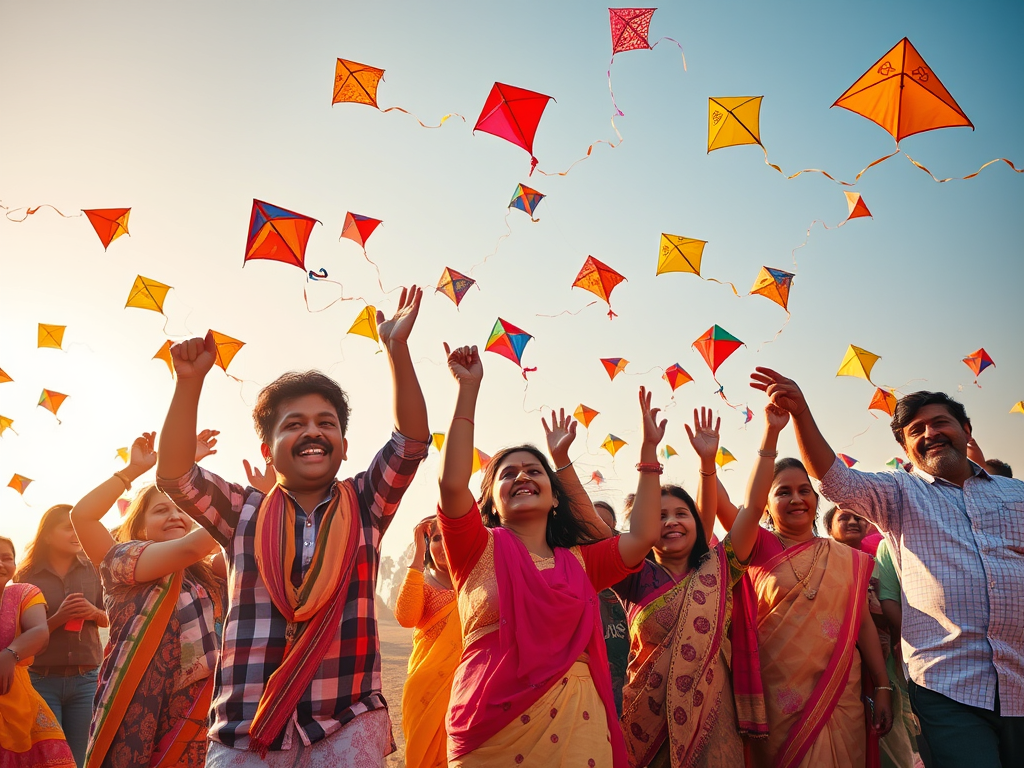
While Makar Sankranti is celebrated throughout India, it takes on distinct regional forms and names. In Gujarat and Rajasthan, it is known as Uttarayan and is famous for vibrant kite-flying festivals. Punjab and Haryana celebrate it as Maghi, preceded by the bonfire festival of Lohri on January 13th. Tamil Nadu observes the four-day Pongal festival with elaborate rituals dedicated to the Sun God and cattle. In Assam, it becomes Magh Bihu or Bhogali Bihu, a week-long feast celebrating the harvest. Karnataka calls it Suggi, while in Maharashtra it is Makar Sankranti itself. The festival transcends religious boundaries, with participation from Hindu, Sikh, and other communities across the subcontinent.
Why: Historical and Cultural Significance
Makar Sankranti holds profound spiritual, agricultural, and cultural importance. Agriculturally, it celebrates the winter harvest of crops such as wheat, rice, sesame, and sugarcane, marking a time of abundance when farmers reap the fruits of their labor. Spiritually, the festival signifies the end of the inauspicious month of Pausha and the beginning of the auspicious month of Magha. According to Hindu mythology, Lord Surya (the Sun God) visits his son Shani (Saturn), who rules Capricorn, symbolizing the reconciliation between father and son and the victory of light over darkness.
The Mahabharata mentions that Bhishma, lying on a bed of arrows, chose to give up his life during Uttarayana as it was believed that souls departing during this period attain liberation (moksha) without rebirth. Holy dips in sacred rivers, especially at the confluence of the Ganges, Yamuna, and the mythical Saraswati at Prayagraj (formerly Allahabad), are believed to cleanse sins and bring spiritual merit. The festival thus represents renewal, gratitude, prosperity, and the eternal cycle of nature.
How: Celebrations and Traditions
Ritual Bathing: The day begins with a holy bath in rivers such as the Ganges, Yamuna, Godavari, Krishna, or Kaveri. Millions of devotees gather at river banks, particularly at Prayagraj during the Kumbh Mela years, to take the sacred dip at dawn, believed to purify the soul and wash away sins.
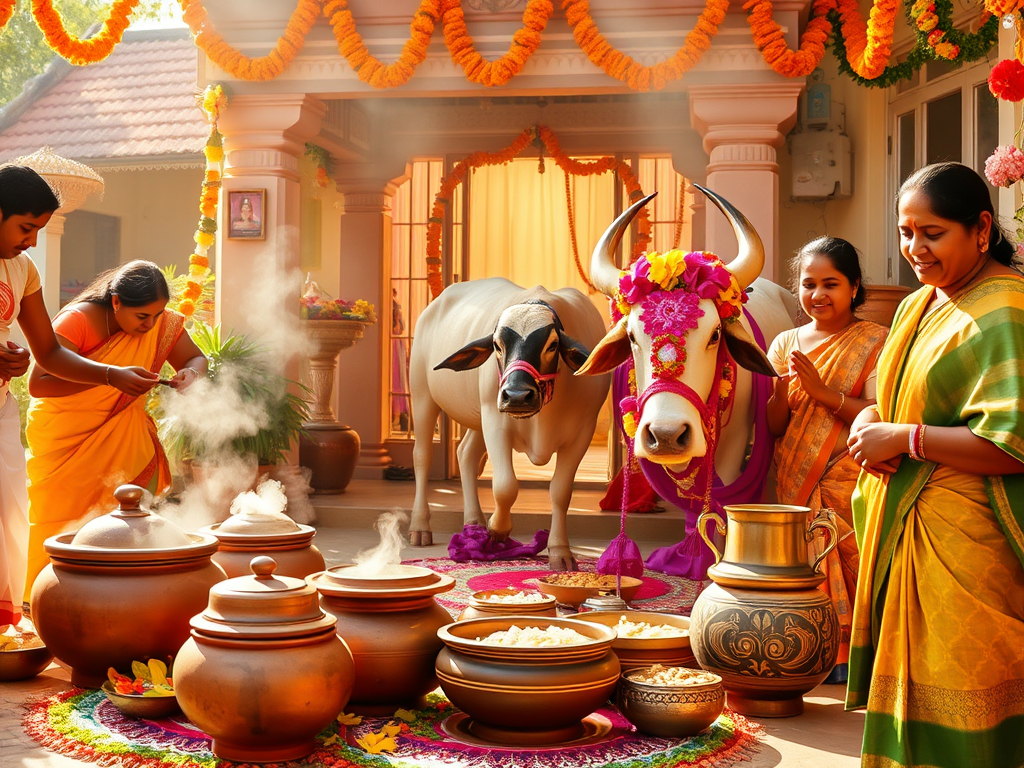
Traditional Foods: Sesame seeds (til) and jaggery (gur) are the signature ingredients. Popular delicacies include til laddoo (sesame sweets), gajak (sesame and jaggery brittle), chikki, khichdi (a rice and lentil dish), and freshly harvested rice preparations. In Tamil Nadu, the famous Pongal dish—sweet rice cooked with milk, jaggery, and cardamom—is prepared in earthen pots and offered to the Sun God.
Kite Flying: Gujarat and Rajasthan’s skies become canvases of color as thousands of kites soar during Uttarayan. International kite festivals in Ahmedabad draw participants worldwide. The tradition symbolizes awakening from winter slumber and celebrating the Sun’s arrival. Kite battles, flying competitions, and night-time illuminated kites create spectacular displays.
Bonfires and Community Gatherings: In Punjab, Lohri bonfires mark the eve of Makar Sankranti. Communities gather around fires, singing folk songs, performing the Bhangra dance, and offering prayers for prosperity. In Assam, Meji (temporary structures) are burned in communal celebrations.
Charity and Giving: Known as Makar Sankranti Daan, the tradition of giving is central to the festival. People donate food, clothes, blankets, and money to the needy. Feeding cows, offering food to birds, and distributing sweets to neighbors strengthen community bonds and express gratitude for blessings.
Cattle Worship: During Tamil Nadu’s Pongal, the third day (Mattu Pongal) honors cattle. Bulls and cows are bathed, decorated with flowers and painted horns, and offered special prayers in recognition of their role in agriculture. The Jallikattu bull-taming sport is also held in some regions.
Decorations: Homes are adorned with rangoli (colorful floor patterns made from rice flour, flowers, and colored powders) or kolam in South India. Mango leaves and marigold garlands decorate doorways, and earthen pots painted with turmeric and kumkum add festive charm.
Conclusion
Makar Sankranti is more than a harvest festival; it is a celebration of India’s agrarian heritage, spiritual depth, and cultural diversity. Through its myriad regional expressions, the festival unites millions in gratitude for nature’s abundance, the warmth of the Sun, and the promise of prosperity. Whether through the joyous flight of kites in Gujarat, the sacred Pongal offering in Tamil Nadu, or the communal bonfires of Punjab, Makar Sankranti embodies the timeless Indian philosophy of harmony between humanity, nature, and the cosmos.
References
- Flood, G. (1996). An Introduction to Hinduism. Cambridge: Cambridge University Press.
- Fuller, C. J. (2004). The Camphor Flame: Popular Hinduism and Society in India. Princeton: Princeton University Press.
- Government of India, Ministry of Culture. (2022). “Festivals of India.” Available at: https://indiaculture.gov.in
- Klostermaier, K. K. (2007). A Survey of Hinduism. Albany: State University of New York Press.
- Singh, R. P. B. (2011). “Sacred Geography of India: Pilgrimages and Festivals.” National Geographical Journal of India, 57(3), 145-162.
- Underhill, M. M. (1991). The Hindu Religious Year. Calcutta: Association Press.
- Viswanathan, E. (2005). “Pongal: The Harvest Festival of Tamil Nadu.” Indian Folklife, 18, 12-14.
- Yadav, S. K. (2018). “Astronomical Significance of Makar Sankranti.” Journal of Indian Culture and Tradition, 12(1), 88-95.

 HABBA
HABBA 
Leave a comment